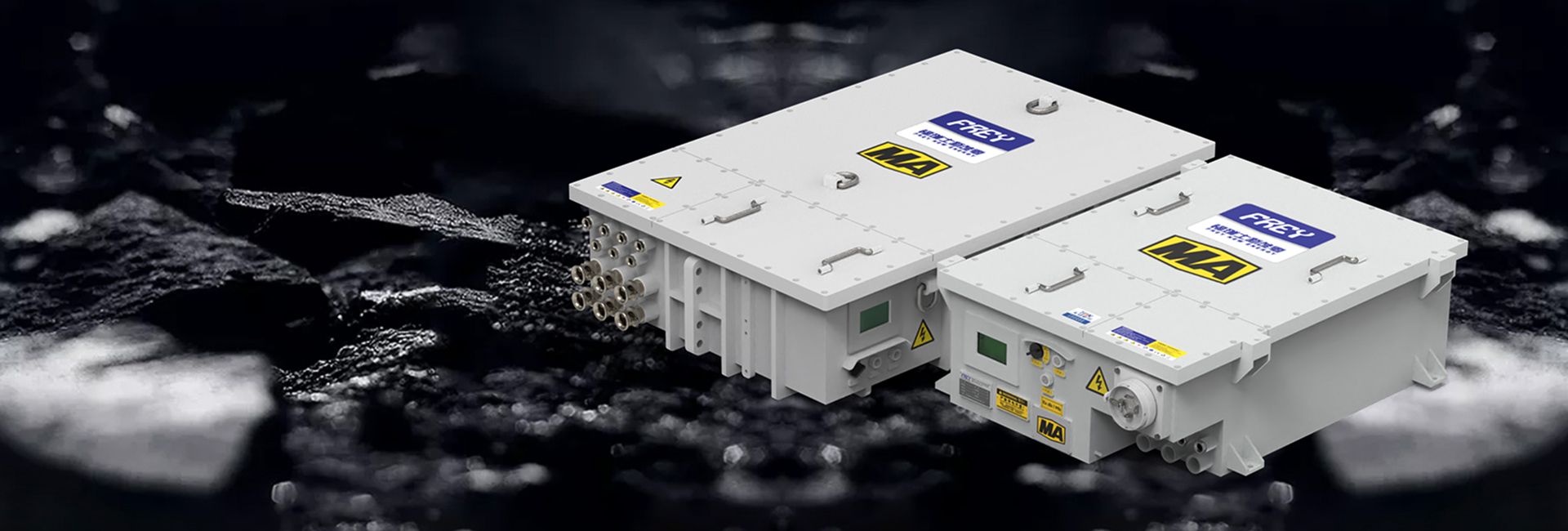
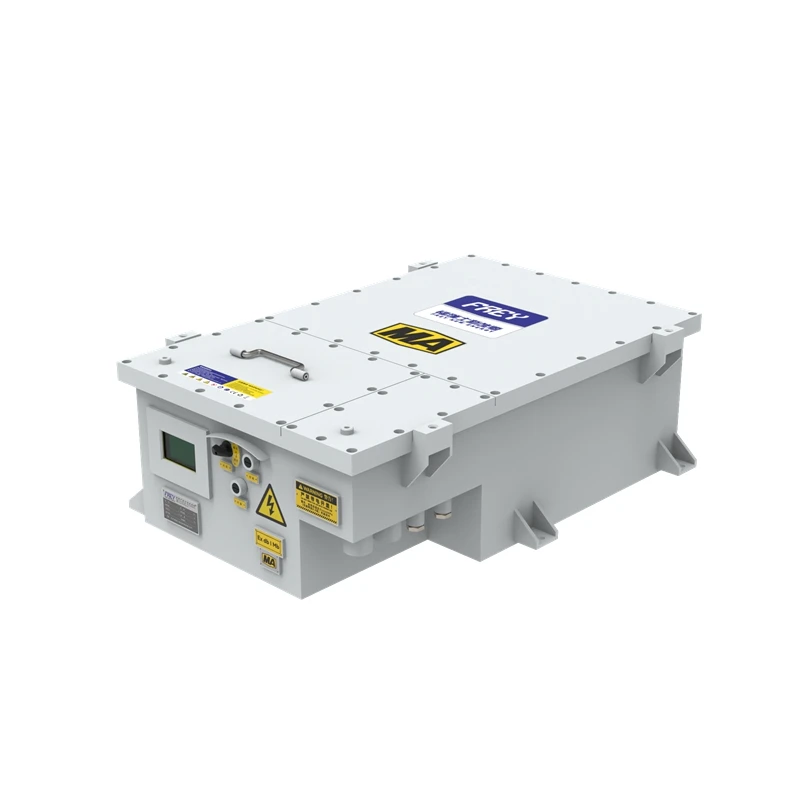
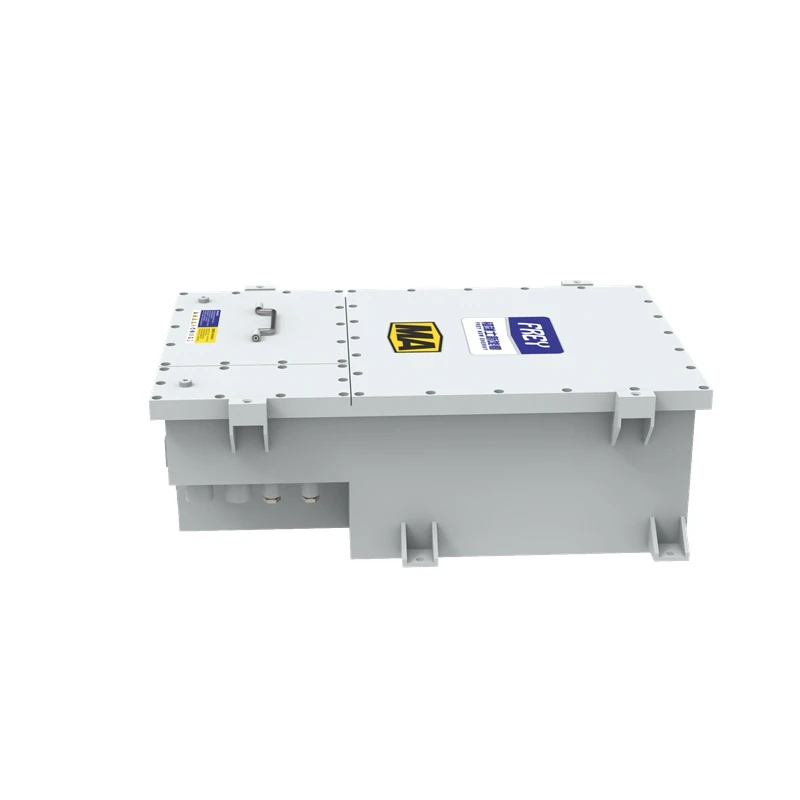
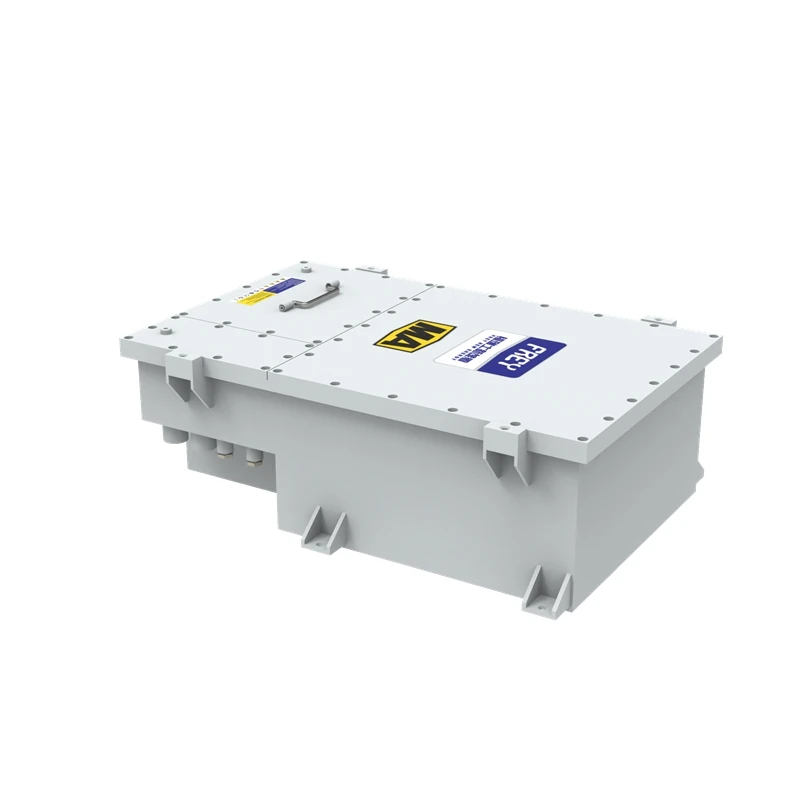
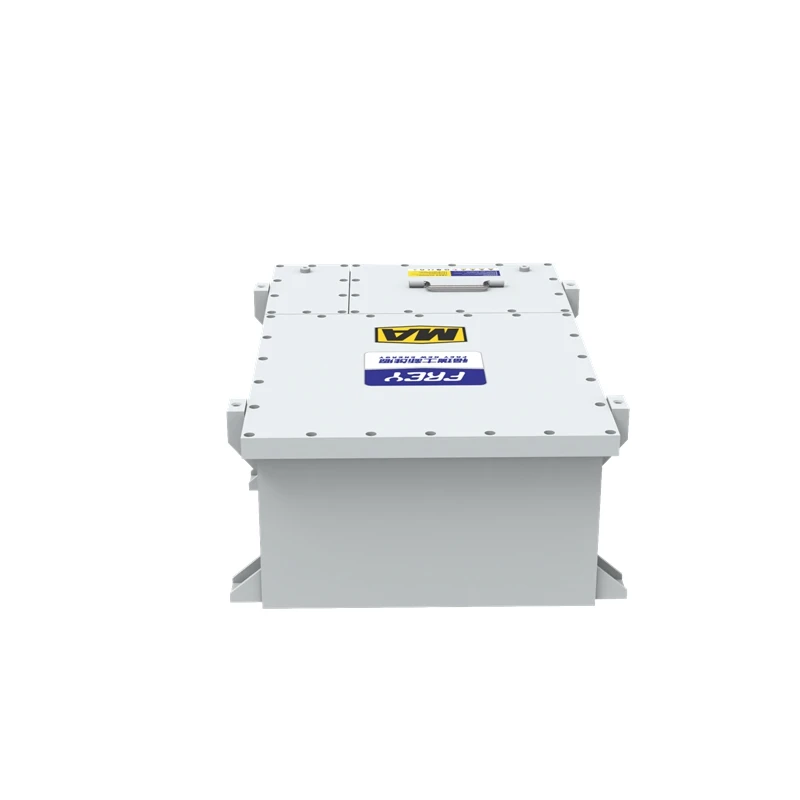
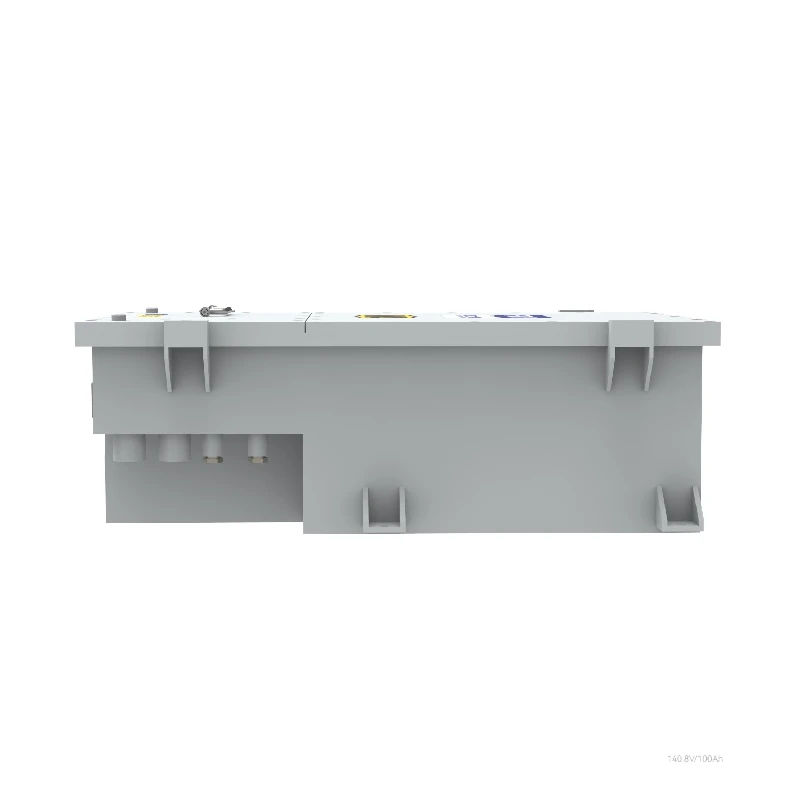
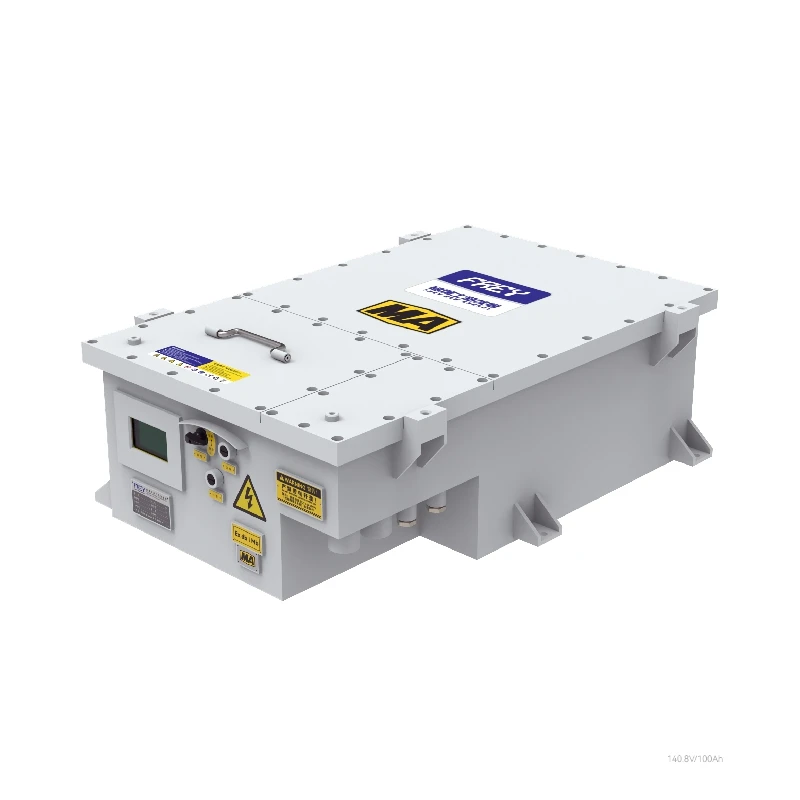
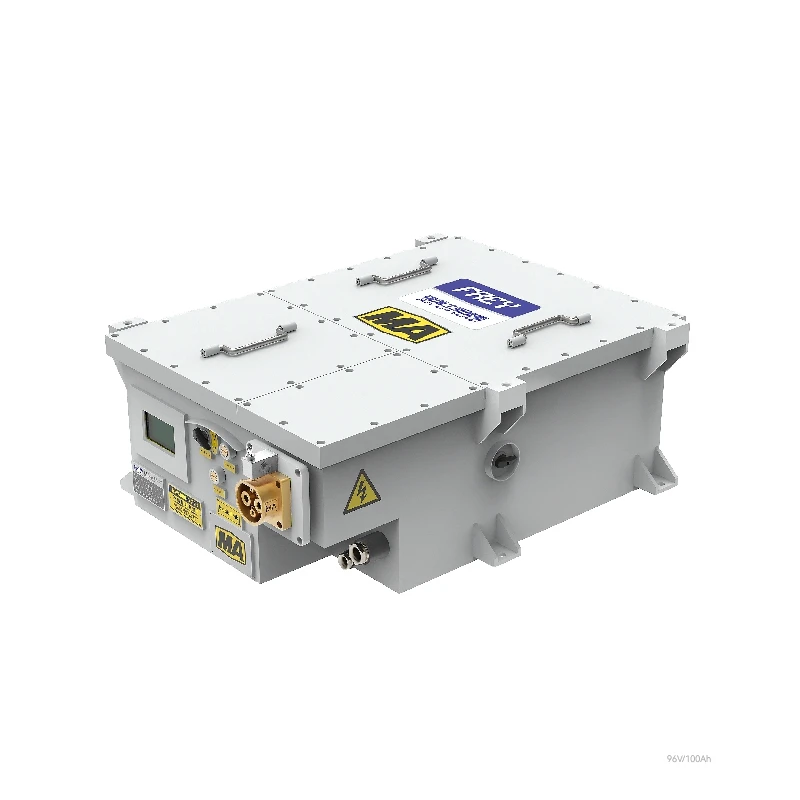
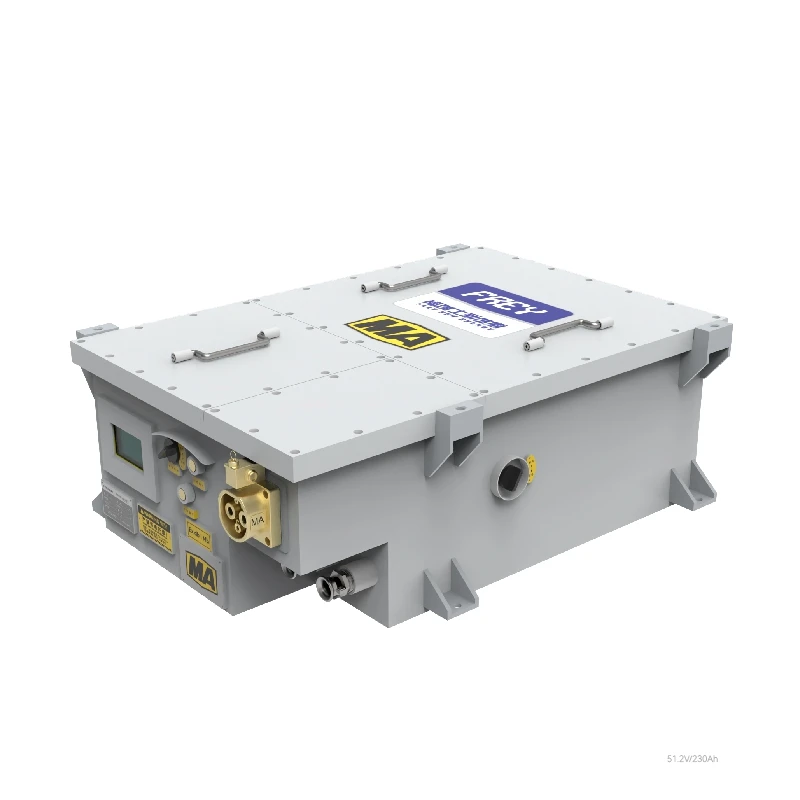
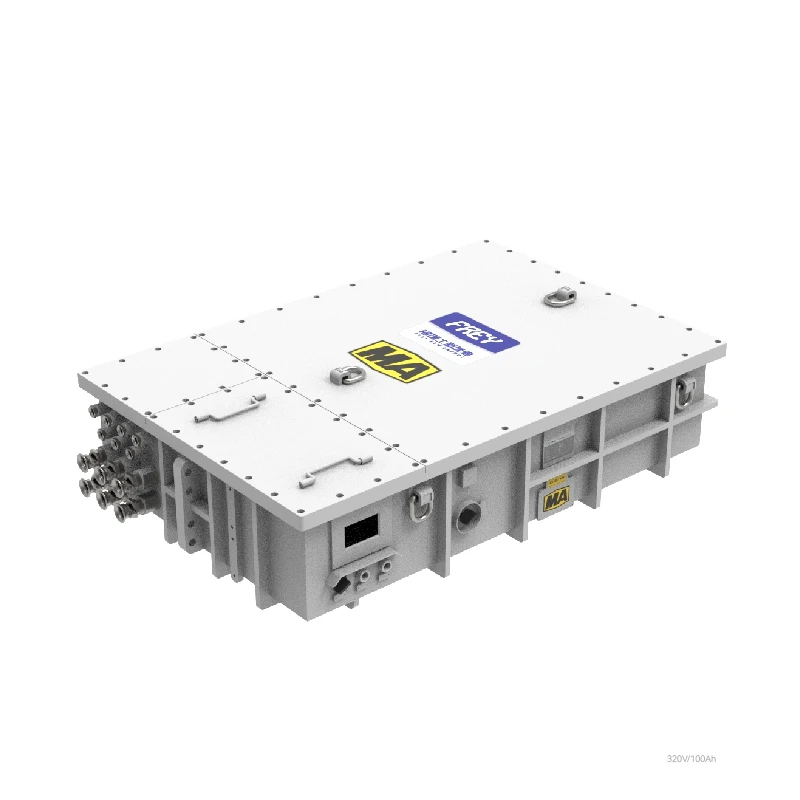
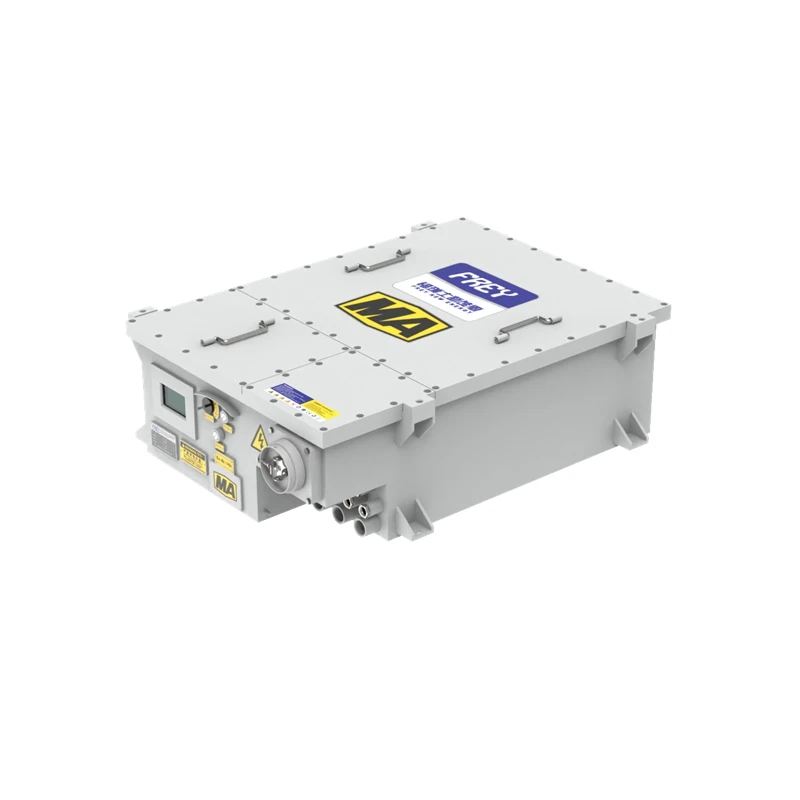
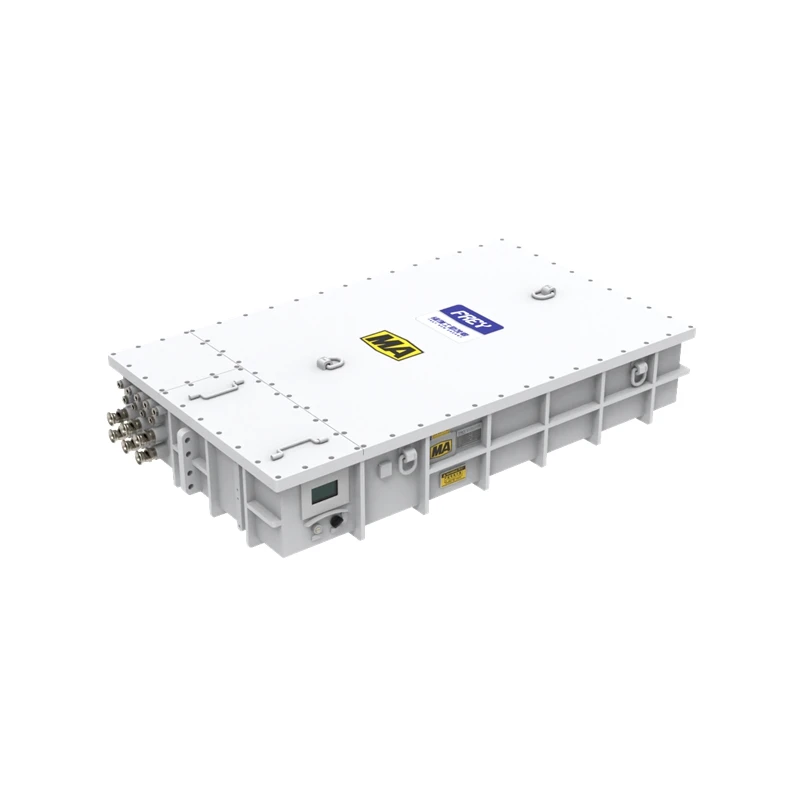
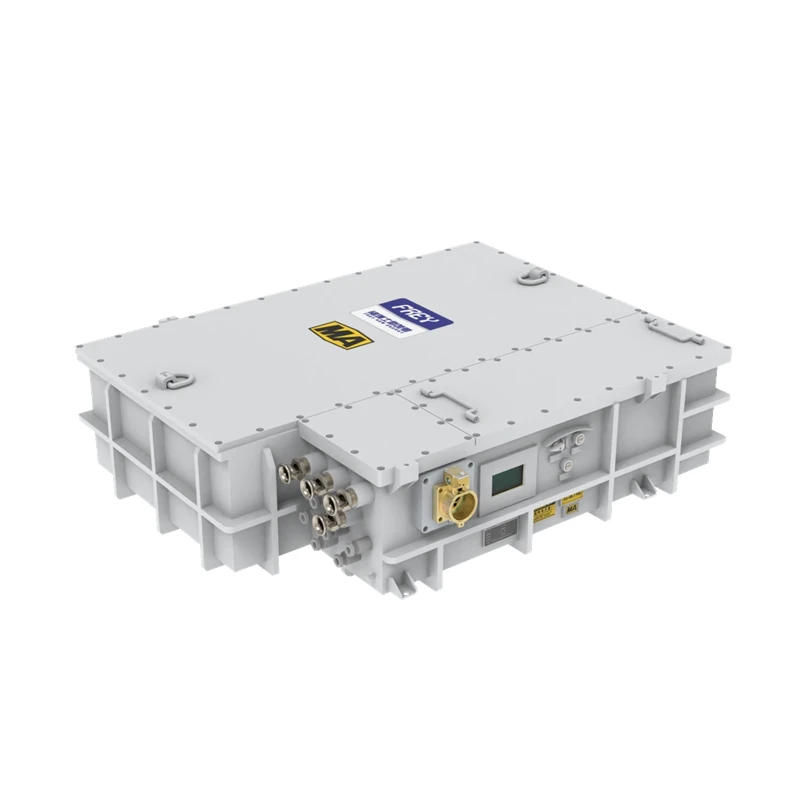
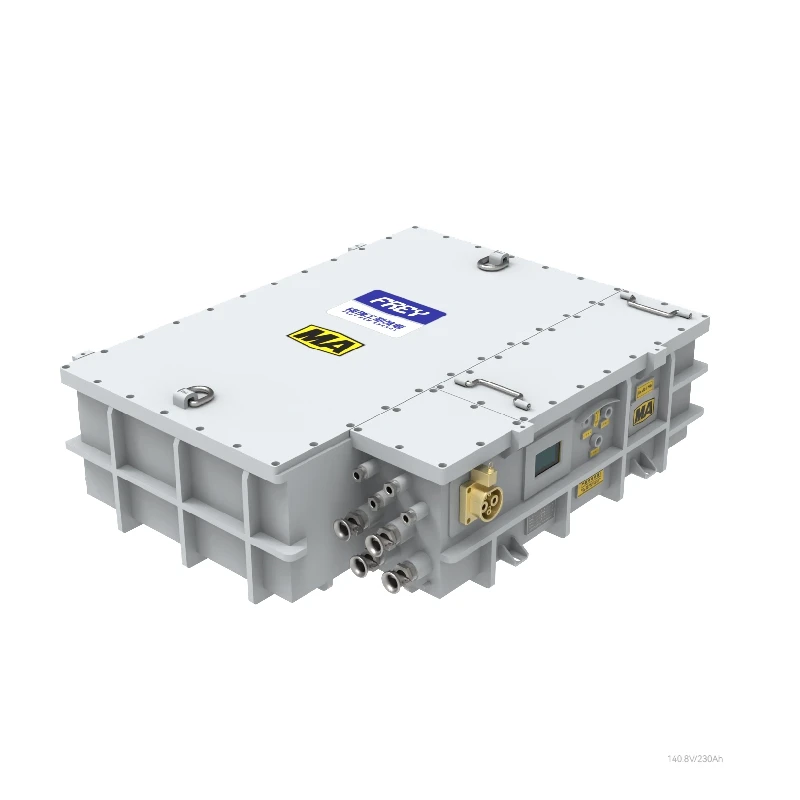
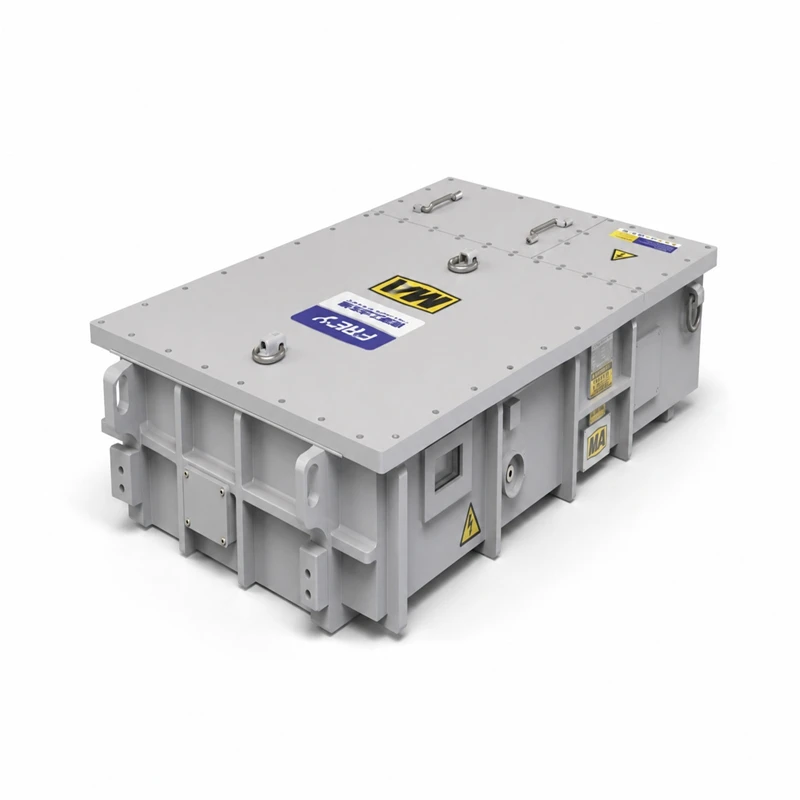
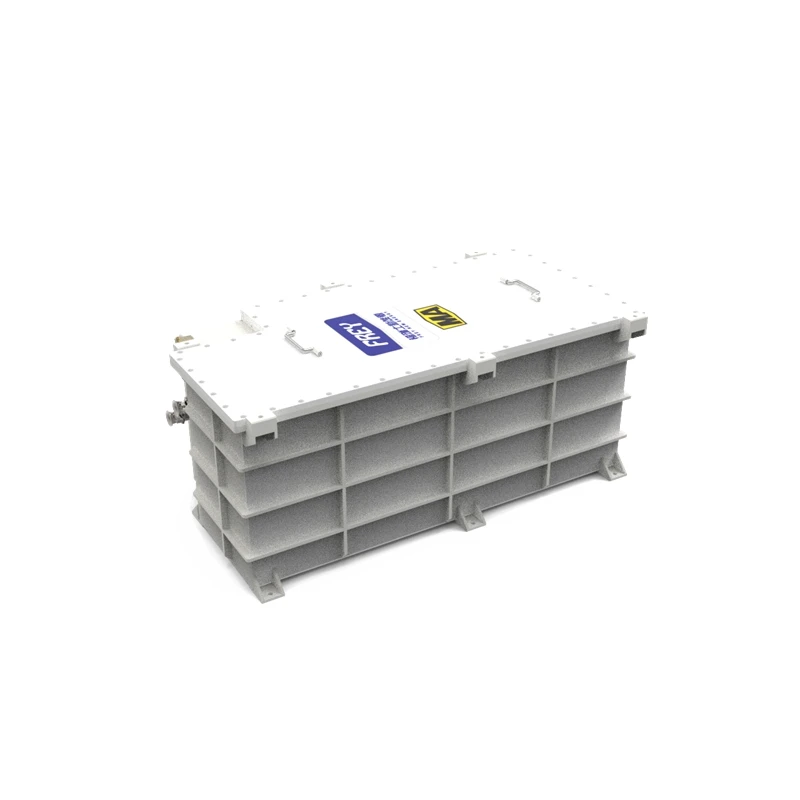
140V100AH
EvFrey mining lithium battery products are built around MA-certified cells, explosion-proof structures, an in-house BMS, and a battery health management system. Together, these technologies create a comprehensive safety system covering cell materials, module thermal insulation and vibration resistance, software and hardware protection, real-time monitoring, and fault traceability. The product range supports multiple voltage platforms and vehicle capacities, with proven applications in explosion-proof locomotives, monorails, rubber-tired vehicles, and firefighting robots.
Product Parameters
| Specifications | DXBL 14080/140.8 C(A) |
| Certificate No. | MAA220158 / KAA220034 |
| Cell Model | FREY36130290-100Ah |
| Cell dimension | 36*130*290mm |
| Casing material | Aluminum alloy |
| Standard capacity | 100Ah |
| Rated voltage | 140.8V |
| Max. charge voltage | 160.6V |
| Cut-off voltage | 121V |
| Standard charge current | 50A |
| Charging time | About 2h |
| Continuous discharge current | 50A |
| Peak discharge current | 100A |
| Peak duration | 20s |
| Battery dimension | ≤980*680*330mm |
| Total weight (Approx.) | About 390 kg |
| Standard temperature | 0℃~45℃ |
| Discharge temperature | -20℃~55℃ |
| Storage condition | 20℃~45℃; Humidity 25%~65% |
| IP Grade | IP54 |
| Plastic spraying | gray |
Why Choose EvFrey Mining Batteries?

5 MA-Certified Cells
Proven Safety
LFP chemistry, heat-resistant separators, and flame-retardant electrolytes provide enhanced safety for underground mining.
Triple Protection
Explosion-Proof Design
An explosion-proof enclosure, LFP cells, and an in-house BMS protect against electrical, thermal, and insulation faults.
Smart BMS
Early Risk Detection
High-accuracy SOC and SOH algorithms monitor battery health and detect internal short circuits before thermal runaway occurs.
51.2V–320V
Versatile Applications
MA-, KA-, and KY-certified solutions support mining locomotives, rubber-tired vehicles, and explosion-proof monorails.
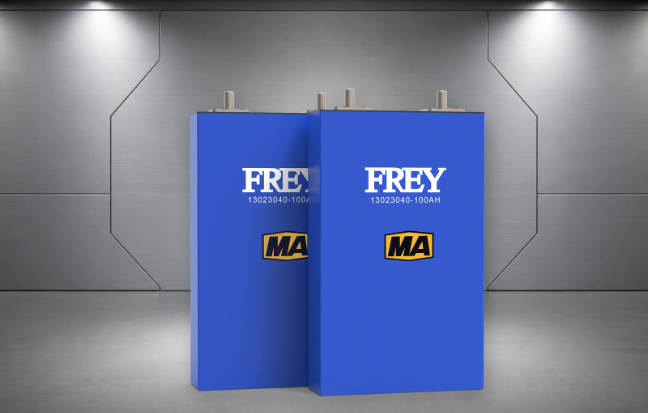
MA-Certified LFP Cells, Built for Mining Safety
EvFrey uses five MA-certified LFP cell models engineered for underground mining. Thermally stable chemistry, modified graphite, ceramic-coated separators, and flame-retardant electrolyte help reduce internal short-circuit and thermal-runaway risks. Designed to meet MT/T 1200-2023 and GB 3836 requirements, these cells deliver reliable safety, consistency, and long cycle life in demanding mine environments.
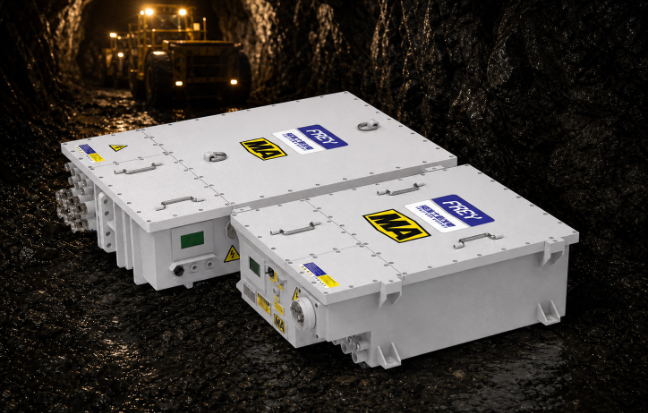
Explosion-Proof Power, Triple-Layer Protection
EvFrey combines a rugged explosion-proof enclosure, LFP cells, and an in-house BMS to create a triple-layer safety system. Software and hardware protection cover overcharge, over-discharge, short circuit, temperature, and insulation faults. Separated power and control compartments, IP65 protection, and traceable fault records support safer, more reliable underground operation.
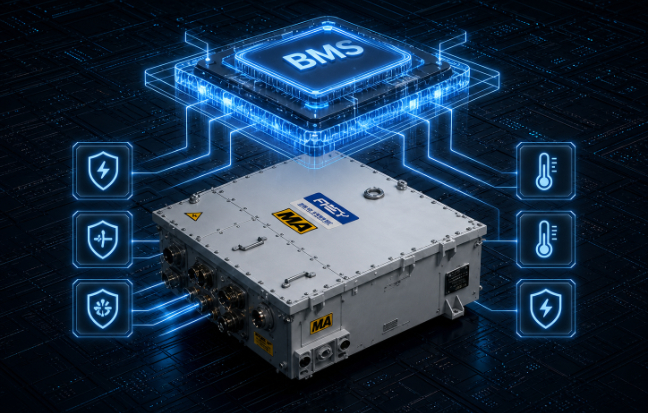
In-House Mining BMS, Intelligent Risk Detection
EvFrey’s in-house mining BMS uses high-accuracy SOC and SOH algorithms to monitor battery condition, cell consistency, and capacity degradation. Full-condition internal short-circuit detection identifies abnormal cells before risks escalate, while intelligent protection can isolate the battery from the main circuit. This improves safety, maintenance efficiency, and long-term system reliability.
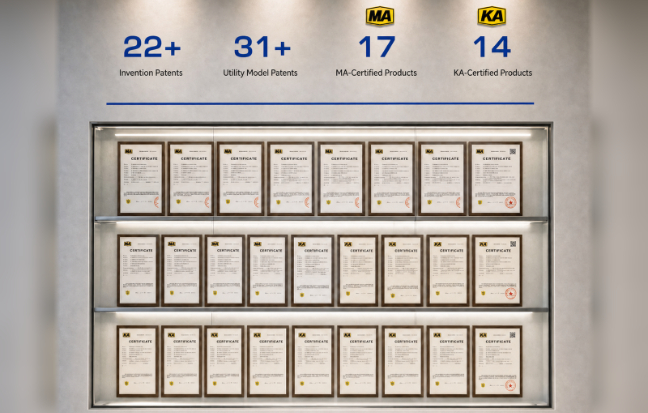
Certified Platforms, Versatile Mining Applications
EvFrey offers MA-, KA-, and KY-certified battery solutions across voltage platforms from 51.2V to 320V. The portfolio supports 2.5-ton to 12-ton mining locomotives, explosion-proof rubber-tired vehicles, and monorail systems. Multiple capacities and platform options enable flexible integration for different vehicle types, operating conditions, and mine-site requirements.
Related FAQ
What is a mining-equipment battery?
A mining-equipment battery supplies traction or backup power to locomotives, haulage vehicles, drills and auxiliary equipment. It normally requires greater resistance to vibration, dust, temperature variation and heavy loads, together with the applicable mine-safety requirements.
How many battery modules does a mining locomotive need?
The number depends on system voltage, required energy and power, installation space and module specifications. Redundancy, service method and weight distribution should also be considered during system design.
Are all electric mining locomotives battery powered?
Mining locomotives may use batteries, overhead lines or other power arrangements; not all are fully battery powered. Battery models offer route flexibility without continuous overhead connection but require charging or battery-swapping infrastructure.
What voltage does a mining-locomotive battery use?
Voltage is determined by the locomotive, traction motor, power demand and original electrical system; there is no universal range. Selection must follow the vehicle documentation and confirm insulation, connectors, charger and communication requirements.
What challenges do battery-powered mining machines face?
Common challenges include safety approval, thermal management, low-temperature performance, dust and vibration protection, charging infrastructure and runtime planning. These must be addressed through coordinated cell, enclosure, BMS, charger and maintenance design.
Can industrial lithium batteries be used in oilfield equipment?
Industrial batteries can be configured for drilling auxiliaries, telemetry or hybrid energy systems, subject to the equipment and hazardous-area requirements. Oilfield and mining rules differ, so certification and system design must be application specific.
What are the advantages of battery mining locomotives?
Benefits include no exhaust emissions during operation, lower noise, route flexibility and fewer routine maintenance items. Energy and cost benefits depend on duty cycle, shifts, charging infrastructure, electricity price and maintenance practices.
What information is needed to select a mining-locomotive battery?
Provide the locomotive model, original battery or system voltage, capacity, peak power, shift and runtime requirements, installation space, weight, temperature, connectors, communication and safety approvals. A battery and charging solution can then be defined.
How should the cost of a battery-electric mining locomotive be evaluated?
Cost depends on vehicle specifications, battery capacity and voltage, approvals, charging or swapping infrastructure and customization. Evaluation should include energy, maintenance, downtime, battery replacement and infrastructure as well as the initial purchase price.
Related Products